.svg)
.svg)
Conversations about the City of Today
July 1, 2018
.avif)
Chance, Stone, and Hyperloop
At the closing event of MakeCity, the festival for architecture and alternative approaches, inspiring speakers discussed on Sunday at the "Urban Center Am Gleisdreieck": How do matter and built space, mobility and movement – but also the power of chance – shape Berlin?
Berlin, July 5, 2018 – How can we think about, build, and design cities differently, beyond distant future scenarios? Under this guiding principle, the Urban Center Am Gleisdreieck, COPRO, the architecture firm O&O Baukunst, and the future Urban Ideation Lab "B-Part" invited Berliners on July 1 to a dialogue with experts and thought leaders from the transportation sector, the start-up scene, the nighttime economy, the arts, and literature. The event's conclusion: Berlin is Germany's innovation driver, both in terms of culture and in urban development, mobility, and sustainable working environments. The creation of so-called "Innovation Labs" in the capital is intended to catalyze this development.
Speakers at the event included Markus Penell, head of the architecture firm O&O Baukunst, and Berlin-based artist Christian Awe. Penell and his firm developed the master plan for the future "Urbane Mitte Am Gleisdreieck" district. Other participants included Dr. Meike Niedbal, Head of Business Development at DB Station & Service and Project Lead Smart Cities; Jackie Thomae, journalist and bestselling author; Tresor founder Dimitri Hegemann; and Darius Moeini, co-founder of Numa Berlin, who discussed topics such as mobility, startups, art and culture, and Berlin's nightlife. The panel was moderated by journalist and non-fiction author Dr. Christian Ankowitsch.
B-Part: The Urban ideation lab for shaping the living and working environments of tomorrow
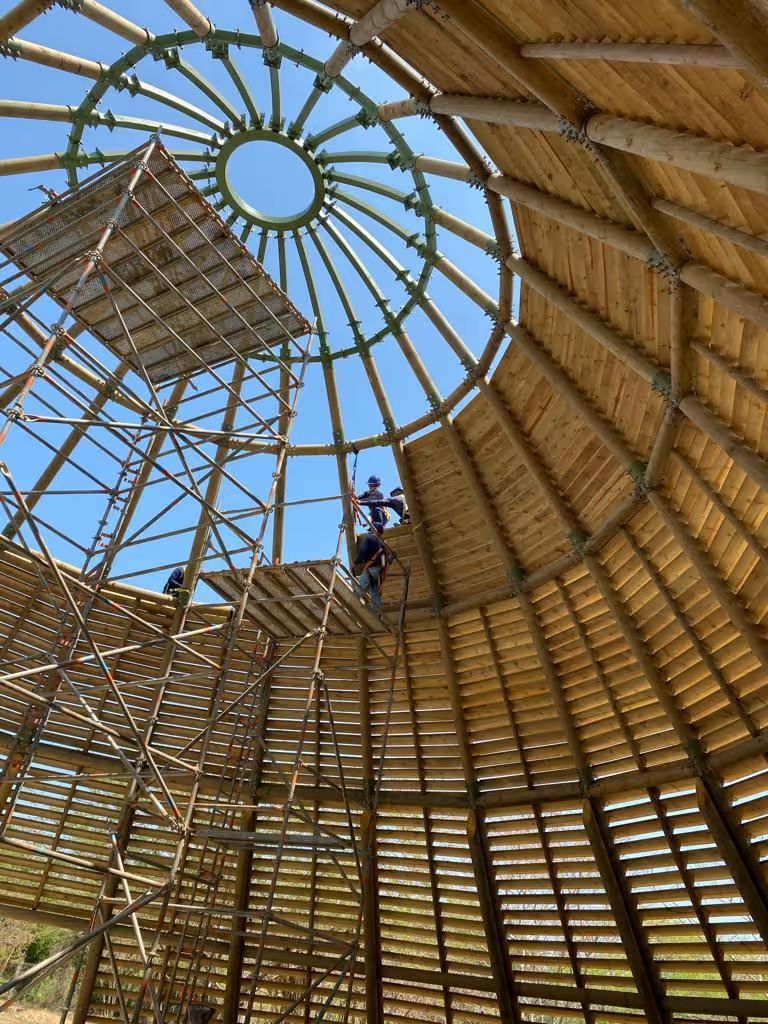
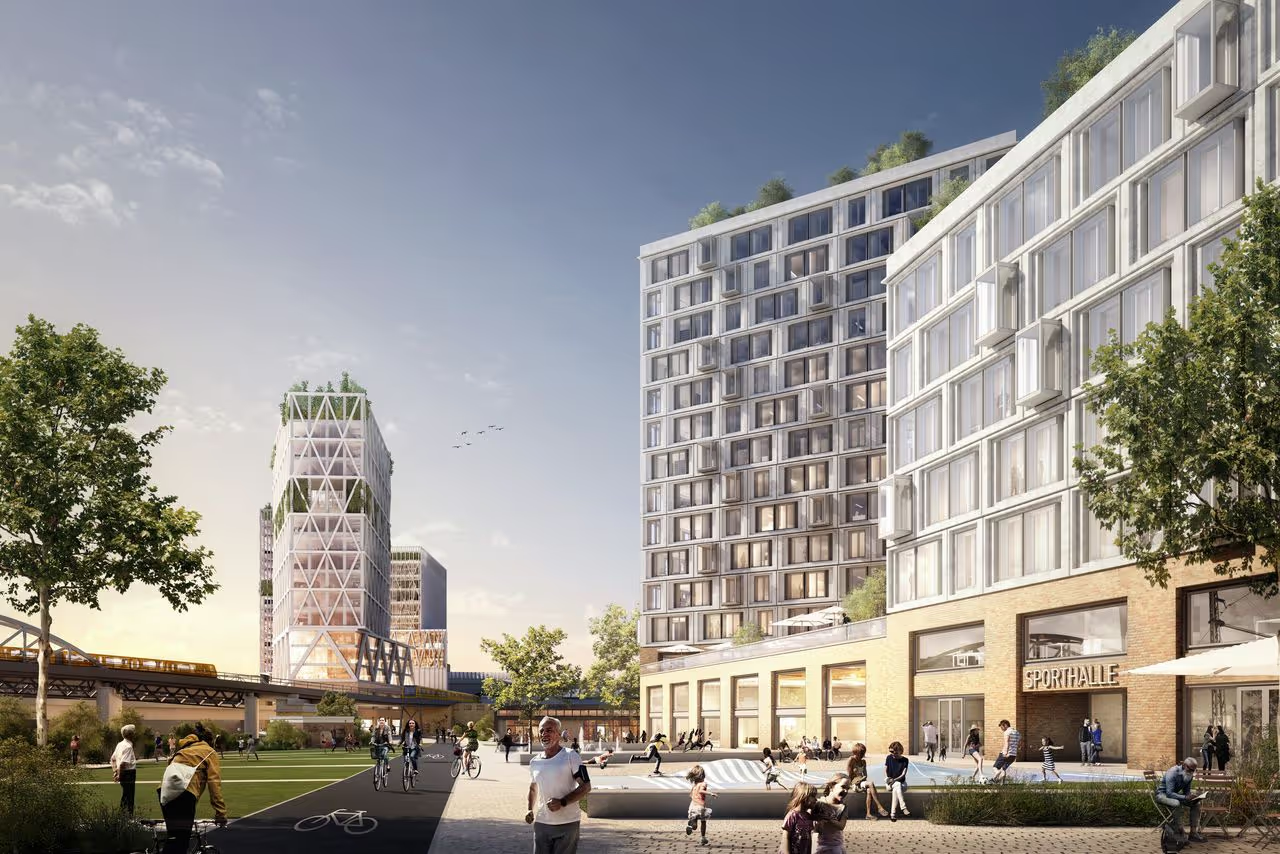
The event was kicked off by Ansgar Oberholz, founder of the internationally renowned coworking pioneer "St. Oberholz," with the announcement of B-Part, a laboratory for the ideal urban quarter. On the site where the "Urbane Mitte Am Gleisdreieck," one of Berlin's last remaining inner-city development areas, is slated to be completed, a temporary building constructed using modular timber construction will be erected in early 2019. B-Part will offer approximately 1,000 square meters of innovation space directly adjacent to the park for people who want to experience, explore, and help shape the living and working environments of tomorrow. B-Part will provide around 100 workspaces for flexible, healthy, and inspiring work. It will be an intersection of creative workshop, experimental laboratory, and idea incubator. Whether industry, startups, freelancers, or neighbors – the Urban Ideation Lab will be a platform that generates and makes accessible the know-how and content of a wide variety of ideas and people. "It is intended to serve as a pioneer for the development of the Urban Center Am Gleisdreieck and for the future of human coexistence," explains Oberholz, who will support the project as an ambassador until its opening.
"Urban Center Am Gleisdreieck": A future-oriented urban quarter in the heart of Berlin
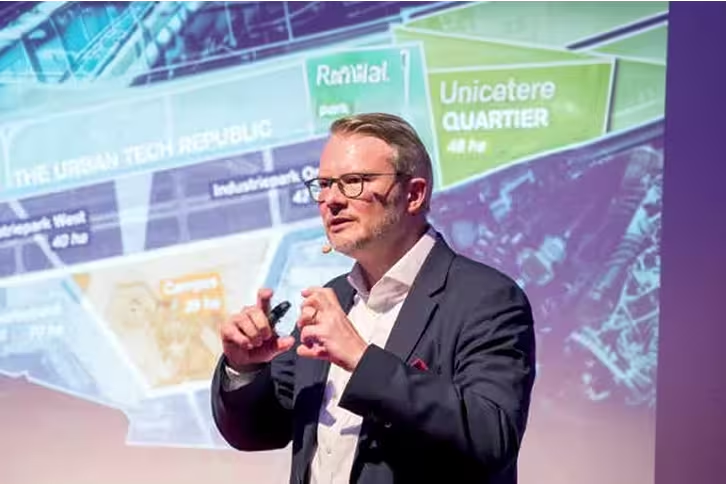
Following this, Markus Penell of O&O Baukunst, under the motto "Stone," presented the topics of architecture and urban planning in the present day to over 150 attendees at the very site where the urban quarter will be built. In his keynote address, Penell presented, among other things, the urban planning concept of "Urban Center Am Gleisdreieck." There, local craftsmanship and regional production will be combined with collaborative work environments and new mobility concepts. Panelists were able to experience the buildings that will be constructed on the site up close in miniature. A walk-through, interactive wooden model of the urban quarter, built to a scale of 1:20, was constructed specifically for the festival and served as a stage for the event.
Cult Club Tresor: Embracing the Unfinished and the Accidental
Dimitri Hegemann spoke about the element of "chance," recounting how an unforeseen situation led him to the perfect location for his future techno club, "Tresor." With its unfinished and authentic charm, it eventually became an important part of Berlin's nightlife scene. After the fall of the Berlin Wall, which sparked a vibrant transformation in the city and brought together many young people from East and West, numerous new spaces and creative ideas emerged. People celebrated this uncontrolled momentum, infusing Berlin with new energy. The burgeoning subculture was renamed the creative industries. In this context, he argued that young people today need more room to experiment in order to maintain this spirit in the future.
Mobility Concepts: From City to Smart City
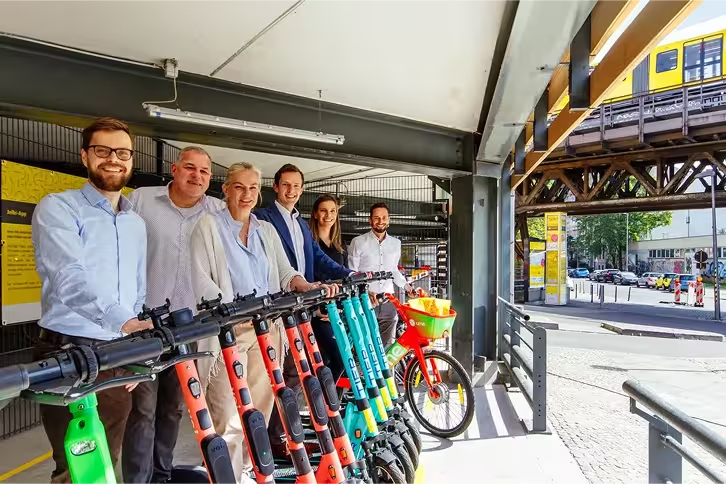
At the end of the event, Dr. Meike Niedbal, Head of Business Development at DB Station & Service, revealed in the panel discussion "Movement" how Deutsche Bahn recognizes mobility as an element shaping cities and what role people play in this process.
The role of intelligent and flexible mobility solutions is central. In her keynote address, "Smart Cities: Logistics, Mobility, and Train Stations," she opened up new perspectives on current and future urban transportation concepts.
Materiality, mobility, and serendipity – these drivers will continue to shape and define Berlin in the future. At Gleisdreieck, they are just three of several key themes that are being examined, refined, and ultimately implemented to ensure the city's future viability. The necessary creativity is increasingly focused in innovation spaces like B-Part, the future Urban Ideation Lab for everyone who wants to experience, explore, and help shape the living and working environments of tomorrow.
An inspiring compilation of the panel discussion can be found on the COPRO Vimeo channel.
Click here for the full press release.
News & Press
.avif)
.avif)
.avif)
.avif)
.avif)
.avif)

.avif)
.avif)
.avif)
.avif)
.avif)
.avif)
.avif)

.avif)
.avif)

.avif)

.avif)
.avif)
.avif)
.avif)
.avif)
.avif)
.avif)
.avif)
.avif)
.avif)
.avif)
.avif)
.avif)
.avif)
.avif)

.avif)
.avif)

.avif)
.avif)



.avif)
.avif)

.avif)
.avif)
.avif)
.avif)
.avif)